|

The ideology
of Ramakrishna Math and
Mission consists of the eternal principles of Vedanta as
lived and experienced by Sri Ramakrishna and expounded by Swami
Vivekananda. This ideology has three characteristics: it is modern
in the sense that the ancient principles of Vedanta have been expressed in
the modern idiom; it is universal, that is, it is meant for the
whole humanity; it is practical in the sense that its principles
can be applied in day-to-day life to solve the problems of life. The
basic principles of this ideology are given below:
1. God
realization is the ultimate goal of life:
One of the important
discoveries made in ancient India was that the universe arises from and is
sustained by infinite consciousness called Brahman. It has both
impersonal and personal aspects. The personal aspect is known by
different names, such as God, Ishvar, Jehovah and so on. Realization of
this Ultimate Reality is the true goal of life, for that alone can give us
everlasting fulfilment and peace.
2. Potential
divinity of the soul:
Brahman is immanent in all
beings as the Atman which is man's true self and source of all happiness.
But owing to ignorance, he identifies himself with his body and mind and
runs after sense pleasures. This is the cause of all evil and suffering.
As ignorance is removed, the Atman manifests itself more and more. This
manifestation of potential divinity is the essence of true religion.
3. Synthesis
of the Yogas:
The removal of ignorance
and mani festation
of inner divinity leading to God realization are achieved through Yoga.
There are four main Yogas: Jnana Yoga (Yoga of Knowledge); Bhakti Yoga
(Yoga of Devotion); Raja Yoga (Yoga of Meditation); Karma Yoga (Yoga of
Work). Each Yoga is an independent means of realizing God. But since
each Yoga involves the cultivation of one of the faculties such as reason,
feeling or will, a combination of all the four Yogas is necessary for the
development of a balanced, 'fully functioning' personality. It is this
synthesis of Yogas that Swami Vivekananda regarded as the ideal of
Ramakrishna Math and Mission. This ideal finds expression in the EMBLEM
of the twin organizations shown here, which was designed by Swamiji
himself. In the emblem the wavy waters represent Karma Yoga; the lotus
flower represents Bhakti Yoga; the rising sun represents Jnana Yoga; the
coiled serpent represents Raja Yoga; and the Swan represents the
Supreme Self. The meaning of the ensemble is: by the combined practice of
all the four Yogas the Supreme Self is realized.
4. Morality
based on strength:
According to Swami
Vivekananda, weakness is the main cause of immorality, evil and suffering
in life, and the cause of weakness is ignorance about one's true nature as
the Atman. Knowledge of the Atman gives us tremendous strength to
overcome our weakness and lead a virtuous life. Everyone is endowed with
so many potentialities, but owing to fear and weakness, most of these
potentialities remain unactualized. When, through knowledge of the Atman,
fear and weakness are overcome, these potentialities manifest themselves.
Swamiji called this process 'man-making education'.
5.
Harmony
of Religions:
Although the idea that 'one
Reality is known by different names' (Vedas) and the idea that 'different
spiritual paths lead to the same goal' (Gita) are found in the Hindu
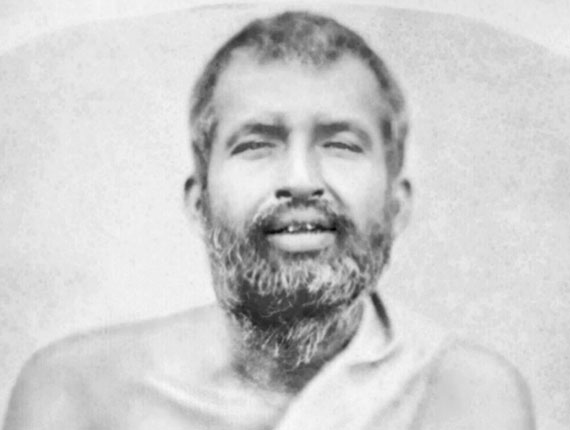
scriptures and in the teachings of several Hindu saints, Sri Ramakrishna
was the first person in history to show through direct experience the
transcendental unity of all religions. His message implies two kinds of
religious harmony: harmony within Hinduism and harmony among world
religions.
a.
Harmony within Hinduism:
Sri Ramakrishna did not identify himself
with any particular sect of Hinduism but accepted Hinduism as a whole. He
showed that Dualism, Non‑dualism and other schools of Hindu philosophy
represent different stages of the integral experience of Reality, and that
the various Hindu Deities are different aspects of one supreme Godhead.
His message has brought about a great deal of harmony among the Hindu
sects, and Sri Ramakrishna himself has become the symbol of the unity of
Hindu religion.
b.
Harmony among world religions:
It should be noted that Sri
Ramakrishna recognized the differences among religions but showed that, in
spite of these differences, they lead to the same Ultimate Goal. This is
the meaning of his famous maxim, Yato mat, tato path, As many
faiths, so many
paths.
Apart from
this, Swami Vivekananda also held that the religions of the world are
expressions of one eternal Universal Religion. Since Vedanta contains all
the basic principles and laws of the spiritual world, Swamiji regarded
Vedanta as that eternal Universal Religion. That is to say, Vedanta can
serve as the common ground for all religions.
6.
Avatarhood of Sri Ramakrishna:
According to the Hindu
religious tradition, God incarnates himself as the Avatar in every Age in
order to give a new message to humanity suited to the needs of each Age.
In the Ramakrishna Movement, Sri Ramakrishna is adored as the Avatar of
the Modern Age. What this means is that his life and teachings have
opened a new way of salvation for humanity. The uniqueness of Sri
Ramakrishna's Avatarhood is that it embodies the spiritual consciousness
of earlier Avatars and prophets, including those who are outside the Hindu
fold, and is in harmony with all religious traditions. In all the
institutions of the Ramakrishna Order, worshipful reverence is shown to
all Avatars and the founders of all religions.
7. A New Philosophy of Work:
Swami
Vivekananda has given a new philosophy of work for the modern world. All
work in the Ramakrishna Math and Mission is done according to this
philosophy of work, which is based on the following principles:
a. According to Vedanta, the
physical universe is a manifestation of God known as Virat. Hence, as
Sister Nivedita has stated, there is 'no distinction between the sacred
and the secular'. What this statement means is that all work is sacred.
Even menial work such as sweeping the floor or mending shoes is to be done
with as much attention and devotion as work in the shrine.
b. The Gita (18.46 & 9.24)
states that the all-pervading God is the ultimate source of all work and
the enjoyer of the fruits of all sacrifice. Hence all work is to be done
as worship and the fruits of actions are to be offered to the Lord.
c. One of the important
principles Swami Vivekananda learned from his Master was Shiva Jnane
Jiva Seva, 'to serve Jiva as Shiva'. Since man is potentially Divine,
service to man is indeed service to God. Instead of looking upon a needy
person as an object of pity, he is looked upon as an object of worship.
Such an attitude elevates both the giver and the recipient.
d. Swami Vivekananda was the
first religious leader in India to speak for the poor and the downtrodden
and to state boldly, 'He who sees Shiva in the poor, in the weak and the
diseased, really worships Shiva; and
with him Shiva is more pleased than
with the man who sees Him only in temples.' It was Swamiji who coined the
word daridra-narayana to refer to the poor. Swamiji's love and
concern for the poor continues as a directive principle in Ramakrishna
Mission's service programmes.
e. When work, any work, is
done fulfilling the above conditions, it becomes a spiritual discipline:
the mind gets purified and the potential Divinity of the soul manifests
itself more and more. Thus work done as worshipful service benefits the
doer himself spiritually: it becomes a spiritual discipline or Yoga. It
is with this understanding of work as a spiritual discipline (Karma Yoga)
that all the service activities of the Ramakrishna Mission, such as giving
food and clothing to the poor, nursing the sick etc, are undertaken. Thus
service done as worship of God in man helps in two ways: it helps
physically or mentally the person who is served, and it helps
spiritually the person who serves.
|
M o t t o :
|
|
This two-fold aim of service
activities, indeed the whole ideology of Ramakrishna Math and Mission, has
been put in a nutshell in the MOTTO of the Ramakrishna Math and Mission,
Atmano mokshartham jagat hitaya cha,
'For one's own salvation and
for the welfare of the world', formulated by Swami Vivekananda. |
Send link to friends |