|
|
|||||||||||||||||||||||||||||||||||||||||||||||||||||||||||||||||||||||||||||||||||||||||||||||||||||||||||||||||||||||||||||||||||||||||||||||||||||||||||||||||||||||||||||||||||||||||||||||||||||||||||||||||||||||||||
| . | |||||||||||||||||||||||||||||||||||||||||||||||||||||||||||||||||||||||||||||||||||||||||||||||||||||||||||||||||||||||||||||||||||||||||||||||||||||||||||||||||||||||||||||||||||||||||||||||||||||||||||||||||||||||||||
|
|
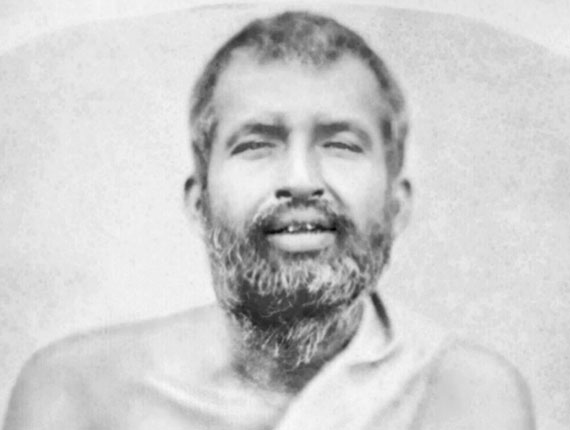
With Sri Ramakrishna At the threshold of youth Narendra had to pass through a period of spiritual crisis when he was assailed by doubts about the existence of God. It was at that time he first heard about Sri Ramakrishna from one of his English professors at college. One day in November 1881, Narendra went to meet Sri Ramakrishna who was staying at the Kali Temple in Dakshineshwar. He straightaway asked the Master a question which he had put to several others but had received no satisfactory answer: Sir, have you seen God? Without a moments hesitation, Sri Ramakrishna replied: Yes, I have. I see Him as clearly as I see you, only in a much intenser sense. Apart from removing doubts from the mind of Narendra, Sri Ramakrishna won him over through his pure, unselfish love. Thus began a guru-disciple relationship which is quite unique in the history of spiritual masters. Narendra now became a frequent visitor to Dakshineshwar and, under the guidance of the Master, made rapid strides on the spiritual path. At Dakshineshwar, Narendra also met several young men who were devoted to Sri Ramakrishna, and they all became close friends.
Difficult Situations
After a few
years two events took place which caused Narendra considerable distress.
One was the sudden death of his father in 1884. This left the family
penniless, and Narendra had to bear the burden of supporting his mother,
brothers and sisters. The second event was the illness of Sri Ramakrishna
which was diagnosed to be cancer of the throat. In September 1885 Sri
Ramakrishna was moved to a house at Shyampukur, and a few months
later to a rented villa at Cossipore. In these two places the
young disciples nursed the Master with devoted care. In spite of poverty
at home and inability to find a job for himself, Narendra joined the group
as its leader.
Beginnings of a Monastic Brotherhood
Sri
Ramakrishna
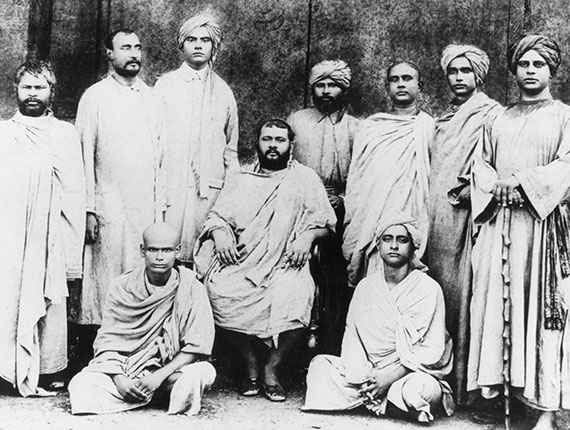
After the Masters passing, fifteen of his young disciples (one more joined them later) began to live together in a dilapidated building at Baranagar in North Kolkata. Under the leadership of Narendra, they formed a new monastic brotherhood, and in 1887 they took the formal vows of sannyasa, thereby assuming new names. Narendra now became Swami Vivekananda (although this name was actually assumed much later.)
Awareness of Lifes Mission
After
establishing the new monastic order, Vivekanan
Discovery of Real India
During his
travels all over India, Swami Vivekananda was deeply moved to see the
appalling poverty and backwardness of the masses. He was the first
religious leader in India to understand and openly declare that the real
cause of Indias downfall was the neglect of the masses. The immediate
need was to provide food and other bare necessities of life to the hungry
millions. For this they should be taught improved methods of agriculture,
village industries, etc. I Thus the masses needed two kinds of knowledge: secular knowledge to improve their economic condition, and spiritual knowledge to infuse in them faith in themselves and strengthen their moral sense. The next question was, how to spread these two kinds of knowledge among the masses? Through education this was the answer that Swamiji found.
Need for an Organization One thing became clear to Swamiji: to carry out his plans for the spread of education and for the uplift of the poor masses, and also of women, an efficient organization of dedicated people was needed. As he said later on, he wanted to set in motion a machinery which will bring noblest ideas to the doorstep of even the poorest and the meanest. It was to serve as this machinery that Swamiji founded the Ramakrishna Mission a few years later.
Decision to attend the Parliament of Religions
It was when
these ideas were taking shape in his mind in the course of his wanderings
that Swami Vivekananda heard about the Worlds Parliament of Religions to
be held in Chicago in 1893. His friends and admirers in India wanted him
to attend the Parliament. He
Swamiji, however, wanted to have an inner certitude and divine call regarding his mission. Both of these he got while he sat in deep meditation on the rock-island at Kanyakumari. With the funds partly collected by his Chennai disciples and partly provided by the Raja of Khetri, Swami Vivekananda left for America from Mumbai on 31 May 1893.
The Parliament of Religions and After
Awakening His Countrymen He returned to India in January 1897. In response to the enthusiastic welcome that he received everywhere, he delivered a series of lectures in different parts of India, which created a great stir all over the country. Through these inspiring and profoundly significant lectures Swamiji attempted to do the following:
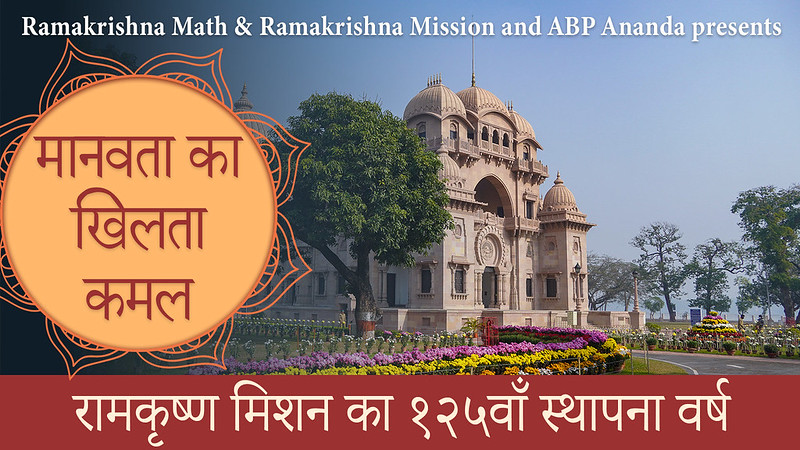
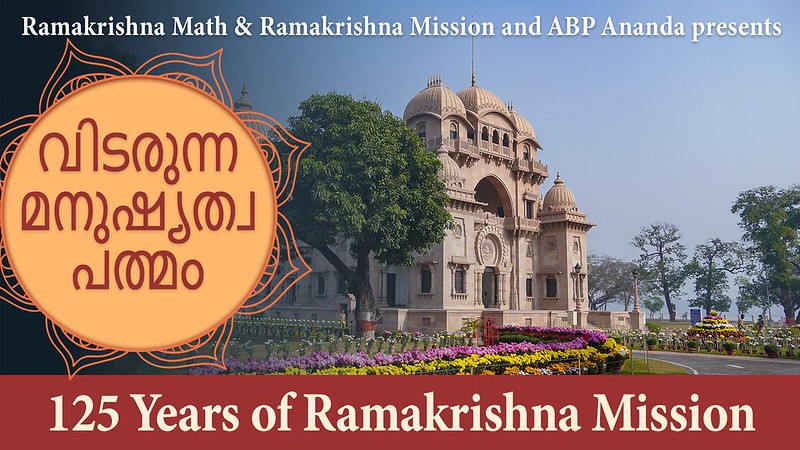
Founding of Ramakrishna Mission Soon after his return to Kolkata, Swami Vivekananda accomplished another important task of his mission on earth. He founded on 1 May 1897 a unique type of organization known as Ramakrishna Mission, in which monks and lay people would jointly undertake propagation of Practical Vedanta, and various forms of social service, such as running hospitals, schools, colleges, hostels, rural development centres etc, and conducting massive relief and rehabilitation work for victims of earthquakes, cyclones and other calamities, in different parts of India and other countries.
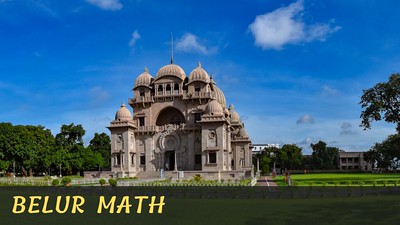
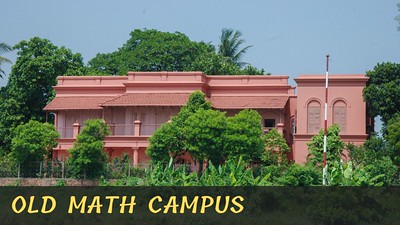
Belur Math In early 1898 Swami Vivekananda acquired a big plot of land on the western bank of the Ganga at a place called Belur to have a permanent abode for the monastery and monastic Order originally started at Baranagar, and got it registered as Ramakrishna Math after a couple of years. Here Swamiji established a new, universal pattern of monastic life which adapts ancient monastic ideals to the conditions of modern life, which gives equal importance to personal illumination and social service, and which is open to all men without any distinction of religion, race or caste.
Disciples It may be mentioned here that in the West many people were influenced by Swami Vivekanandas life and message. Some of them became his disciples or devoted friends. Among them the names of Margaret Noble (later known as Sister Nivedita), Captain and Mrs Sevier, Josephine McLeod and Sara Ole Bull, deserve special mention. Nivedita dedicated her life to educating girls in Kolkata. Swamiji had many Indian disciples also, some of whom joined Ramakrishna Math and became sannyasins.
Last Days In June 1899 he went to the West on a second visit. This time he spent most of his time in the West coast of USA. After delivering many lectures there, he returned to Belur Math in December 1900. The rest of his life was spent in India, inspiring and guiding people, both monastic and lay. Incessant work, especially giving lectures and inspiring people, told upon Swamijis health. His health deteriorated and the end came quietly on the night of 4 July 1902. Before his Mahasamadhi he had written to a Western follower: It may be that I shall find it good to get outside my body, to cast it off like a worn out garment. But I shall not cease to work. I shall inspire men everywhere until the whole world shall know that it is one with God.
Making an objective assessment of Swami Vivekanandas contributions to world culture, the eminent British historian A L Basham stated that in centuries to come, he will be remembered as one of the main moulders of the modern world Some of the main contributions that Swamiji made to the modern world are mentioned below: 1. New Understanding of Religion: One of the most significant contributions of Swami Vivekananda to the modern world is his interpretation of religion as a universal experience of transcendent Reality, common to all humanity. Swamiji met the challenge of modern science by showing that religion is as scientific as science itself; religion is the science of consciousness. As such, religion and science are not contradictory to each other but are complementary. This universal conception frees religion from the hold of superstitions, dogmatism, priestcraft and intolerance, and makes religion the highest and noblest pursuit the pursuit of supreme Freedom, supreme Knowledge, supreme Happiness. 2. New View of Man: Vivekanandas concept of potential divinity of the soul gives a new, ennobling concept of man. The present age is the age of humanism which holds that man should be the chief concern and centre of all activities and thinking. Through science and technology man has attained great prosperity and power, and modern methods of communication and travel have converted human society into a global village. But the degradation of man has also been going on apace, as witnessed by the enormous increase in broken homes, immorality, violence, crime, etc. in modern society. Vivekanandas concept of potential divinity of the soul prevents this degradation, divinizes human relationships, and makes life meaningful and worth living. Swamiji has laid the foundation for spiritual humanism, which is manifesting itself through several neo-humanistic movements and the current interest in meditation, Zen etc all over the world. 3. New Principle of Morality and Ethics: The prevalent morality, in both individual life and social life, is mostly based on fear fear of the police, fear of public ridicule, fear of Gods punishment, fear of Karma, and so on. The current theories of ethics also do not explain why a person should be moral and be good to others. Vivekananda has given a new theory of ethics and new principle of morality based on the intrinsic purity and oneness of the Atman. We should be pure because purity is our real nature, our true divine Self or Atman. Similarly, we should love and serve our neighbours because we are all one in the Supreme Spirit known as Paramatman or Brahman. 4. Bridge between the East and the West: Another great contribution of Swami Vivekananda was to build a bridge between Indian culture and Western culture. He did it by interpreting Hindu scriptures and philosophy and the Hindu way of life and institutions to the Western people in an idiom which they could understand. He made the Western people realize that they had to learn much from Indian spirituality for their own well-being. He showed that, in spite of her poverty and backwardness, India had a great contribution to make to world culture. In this way he was instrumental in ending Indias cultural isolation from the rest of the world. He was Indias first great cultural ambassador to the West. On the other hand, Swamijis interpretation of ancient Hindu scriptures, philosophy, institutions, etc prepared the mind of Indians to accept and apply in practical life two best elements of Western culture, namely science and technology and humanism. Swamiji has taught Indians how to master Western science and technology and at the same time develop spiritually. Swamiji has also taught Indians how to adapt Western humanism (especially the ideas of individual freedom, social equality and justice and respect for women) to Indian ethos.
Swamiji gave Indians proper understanding of their countrys great spiritual heritage and thus gave them pride in their past. Furthermore, he pointed out to Indians the drawbacks of Western culture and the need for Indias contribution to overcome these drawbacks. In this way Swamiji made India a nation with a global mission. Sense of unity, pride in the past, sense of mission these were the factors which gave real strength and purpose to Indias nationalist movement. Several eminent leaders of Indias freedom movement have acknowledged their indebtedness to Swamiji. Free Indias first Prime Minister Jawaharlal Nehru wrote: Rooted in the past, full of pride in Indias prestige, Vivekananda was yet modern in his approach to lifes problems, and was a kind of bridge between the past of India and her present he came as a tonic to the depressed and demoralized Hindu mind and gave it self-reliance and some roots in the past. Netaji Subhash Chandra Bose wrote: Swamiji harmonized the East and the West, religion and science, past and present. And that is why he is great. Our countrymen have gained unprecedented self-respect, self-reliance and self-assertion from his teachings.
| |||||||||||||||||||||||||||||||||||||||||||||||||||||||||||||||||||||||||||||||||||||||||||||||||||||||||||||||||||||||||||||||||||||||||||||||||||||||||||||||||||||||||||||||||||||||||||||||||||||||||||||||||||||||||